 “Over the past decade, South African business leaders learned a hard lesson about power: relying on a single, centralised grid is a massive gamble. Now, the commercial and industrial sectors face the exact same reality with water continuity,” says Robert Erasmus, Managing Director at Sanitech.
When supply interruptions hit, the default reaction for many businesses is to purchase static storage tanks. While holding emergency backup water offers short-term relief, static volume alone cannot sustain an industrial facility through extended municipal outages. True water security requires an active, integrated strategy that manages water across every stage of the operational lifecycle.
Fourfold
First, operations require guaranteed volume continuity, holding sufficient supply to handle prolonged municipal outages without stopping work. Second, teams must manage inbound quality, ensuring that incoming water is tested and refined to match exact process specifications.
Third, businesses must focus on smart internal reuse, capturing process water and treating it for secondary applications around the site to extend available reserves. Finally, outbound compliance is essential: treating wastewater before discharge protects local infrastructure, prevents environmental harm, and shields the business from costly municipal fines.
Protecting production standards
The risk to water continuity is more than dry pipes. Inconsistent water quality presents an equally severe threat to uptime. Fluctuating mineral levels, sediment, or chemical imbalances in municipal supplies can force emergency shutdowns, ruin sensitive manufacturing batches, or cause severe damage to heavy equipment.
Using modular filtration, biological treatment, or targeted UV and chlorination setups, an on-site plant refines incoming water to required specifications, ensuring that operational teams maintain consistent production quality regardless of external municipal fluctuations.
Reuse and compliance
On-site plants fundamentally change how a facility manages its water budget. Instead of viewing process water as a single-use expense, modern treatment setups allow companies to clean and recycle used water back into the facility for cooling towers, equipment washdowns, or general sanitation.
This continuous recycling loop significantly reduces dependence on the municipal grid, making the business far more resilient during regional shortages.
Bottom line
Simultaneously, proper effluent treatment protects the operational bottom line. Municipalities across the country are enforcing stricter regulations and levying heavy financial penalties for discharging non-compliant wastewater.
Cleaning effluent on site avoids these fines, reduces the load on overstretched municipal infrastructure, and ensures that the business actively supports the water security of surrounding communities.
Smarter monitoring
Historically, business leaders hesitated to invest in on-site water infrastructure due to concerns about spatial requirements and the need for specialised on-site engineers. Modern technological advancements have eliminated these friction points.
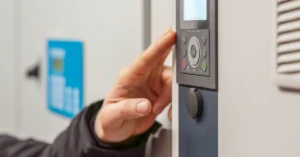
Today’s treatment plants feature remarkably compact footprints, allowing high-capacity systems to be installed directly onto existing facility floors without taking up critical operational real estate. In addition, digital monitoring tools have simplified daily oversight, which means that facility managers no longer require dedicated personnel standing over tanks at every branch.
Centralised management teams can monitor flow rates, volume levels, pH balance, and quality parameters across multiple national sites in real time through automated, remote dashboards.